Rancidity in Edible Vegetable Oils: Mechanisms, Challenges, and Preservation Strategies
Onyango Laurine Awuor
Department of Physical Sciences, Jaramogi Oginga Odinga University of Science and Technology, Bondo (Main) Campus, P.O. Box 210 – 40601, Bondo, Kenya.
Angeline Ochung’ Orwa
Department of Physical Sciences, Jaramogi Oginga Odinga University of Science and Technology, Bondo (Main) Campus, P.O. Box 210 – 40601, Bondo, Kenya.
Solomon Omwoma Lugasi
*

Department of Physical Sciences, Jaramogi Oginga Odinga University of Science and Technology, Bondo (Main) Campus, P.O. Box 210 – 40601, Bondo, Kenya.
*Author to whom correspondence should be addressed.
Abstract
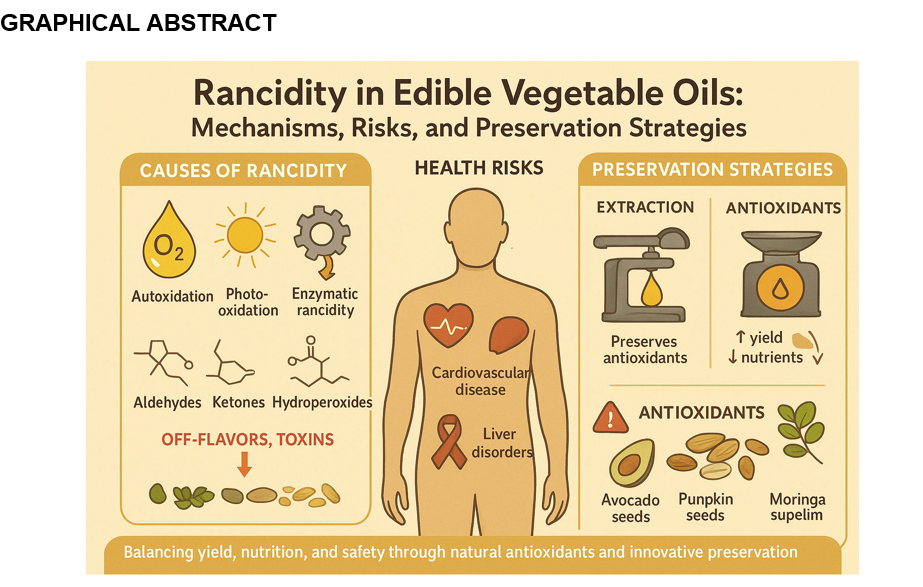
This article examines rancidity in edible vegetable oils, with particular emphasis on its underlying causes, associated health risks, and preservation strategies. Rancidity primarily arises from oxidative processes such as autoxidation, photo-oxidation, and enzymatic activity. These oxidative processes break down unsaturated fatty acids in vegetable oils leading to the formation of aldehydes, ketones, hydroperoxides, and other secondary products. The byproducts lower nutritional quality by depleting essential fatty acids, proteins, and vitamins, while producing off-flavors and odors. Chronic consumption of rancid oils is linked to cancer, hypertension, liver disorders, and cardiovascular disease, highlighting the importance of effective preservation strategies. Some vegetable oils have natural antioxidants that slows down the rancidity process. However, oil extraction (processing) techniques affects these naturally occuring antioxidants. Cold pressing is superior for retaining natural antioxidants and bioactive compounds, while roasting prior to extraction increases oil yield but risks damaging thermolabile nutrients. In terms of preservation, synthetic antioxidants such as Butylated Hydroxytoluene (BHT) are widely used but pose potential health risks. Natural alternatives, particularly Moringa oleifera seed extract, demonstrate strong antioxidant capacity, rivaling or surpassing BHT in delaying peroxide formation and oxidative degradation. Bioactive compounds in moringa, including flavonoids, quercetin, and phenolic acids, not only aid in stabilization but also provide additional health benefits. Integrating optimized extraction techniques with natural antioxidants is proposed as a promising approach to improve the shelf life, safety, and nutritional quality of edible vegetable oils. The use of Moringa oleifera and other plant-based antioxidants such as pumpkin seeds, and avocado seeds are recommended as a sustainable alternative to synthetic preservatives, aligning with consumer demand for healthier, eco-friendly food preservation solutions.
Keywords: Rancidity, edible vegetable oils, artificial antioxidants, natural antioxidants